Thoughts on Business, Marketing and Social Media
Random header image... Refresh for more!

Memeology

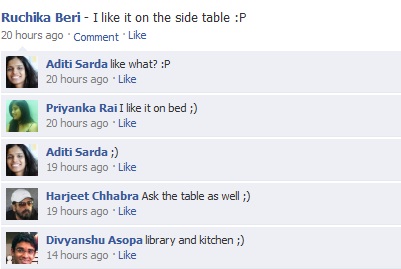
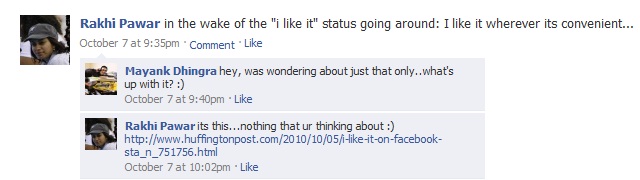
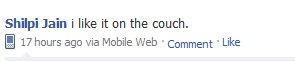
It happened yet again. Facebook saw yet another meme apparently meant to promote ‘Breast Cancer Awareness‘. When I logged into Facebook day before yesterday I was unpleasantly surprised to see some female friends put statuses like these

I was caught off guard and didn’t realize for a while and it got confirmed when I saw this

If you are a regular user of Facebook you might remember a similar meme that surfaced earlier this year. While this meme is apparently all about places where women would like to keep their *purse* and not where they’d like to *do it*, the last meme was about women sharing their *Bra Colour*. I’ll not get into the discuss if such memes actually help spread awareness about Breast Cancer or not but what interests me more is the the “how & why” of these memes.

One of the first Memes I encountered was during my early days of Blogging a few years back was probably “10 things you don’t know about me” or something similar. The sheer fact that a trend needs to grow viral in order to become a meme is an interesting thing and it is worth exploring what makes a meme a meme.

A meme is in a lot of ways like a viral (forward) email/sms as it has the essential elements required to sustain and grow itself. Going back to the ‘Made To Stick’ check list for an idea to spread, a meme should also have certain features for it to go viral. Ideally a meme should be

  • Simple (To ensure maximum participation. For ex: Colour of your Bra, Name of your first Crush)
  • Unexpected (One of the parameters for a meme is also how unexpected/weird/double meaning/out-of-the-ordinary it is. For ex: Where would you like to “whatever”)
  • Emotional (It should be able to elicit a connect emotionally. For ex: 10 Things you didn’t know about me, 5 Things I can’t live without  etc)
  • Direct/In-direct call to action(A direct call like tagging people to do the same on their page/blog etc or an in-direct call to join them in the cause as in the case of Bra Colour meme)

Memes are a win-win situation for most users and the platforms(or the causes?) they spread in with users getting something different to talk/show off and the platform seeing more activity. However as someone interested in marketing I wonder if brands can leverage the meme phenomenon.  Your thoughts?

October 11, 2010   No Comments

Facebook adds Community Page

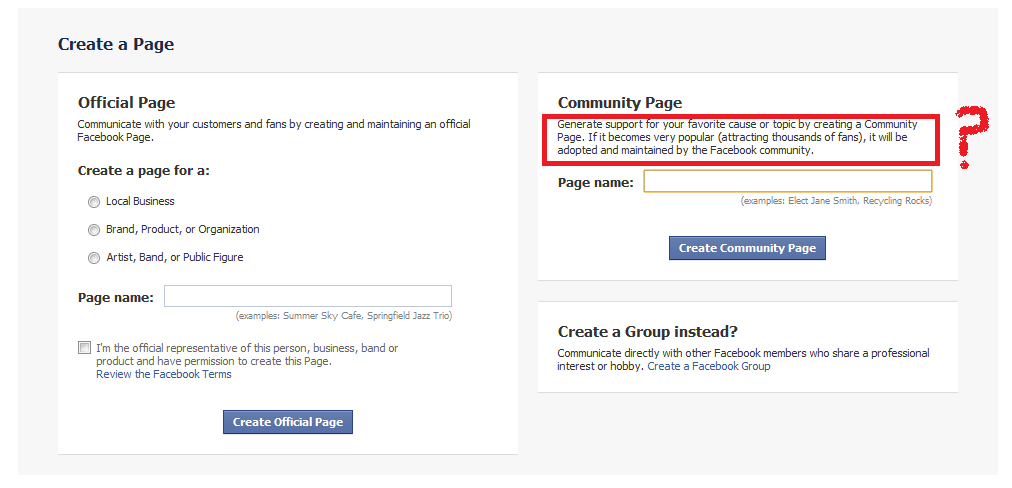
While attempting to create a new Facebook page just now I spotted the new design and what Facebook calls “Community Page”. Though it makes great sense to have a category called community page for there wasn’t a category for non brands/businesses/celebrities and it required a lot of thinking and guess work to fit your community page (eating, drinking, playing) into game, leisure and what not.

However what’s intriguing is the statement mentioned right below the Community Page:

Generate support for your favourite cause or topic by creating a Community Page. If it becomes popular(attracting thousands of fans), it will be adopted and maintained by the Facebook community.

Any idea what the last line there means?

April 1, 2010   2 Comments

You Social, We Social

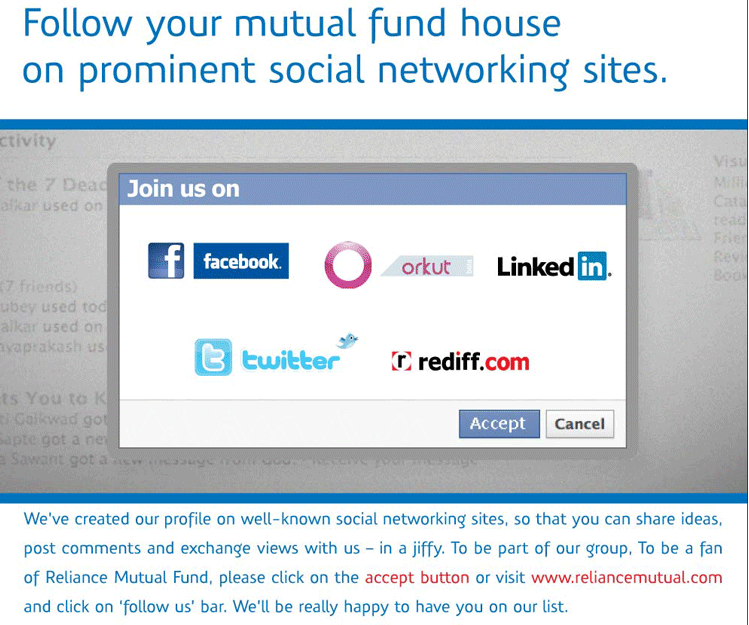
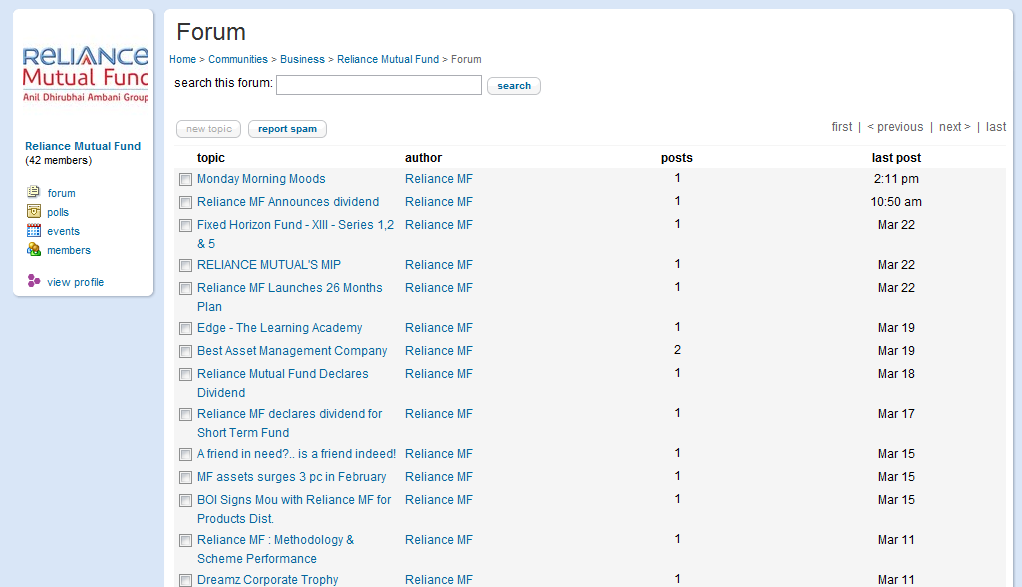
With more and more people from India jumping the Social Media bandwagon, local brands are not standing on the edges anymore and have slowly started to test the Social Media waters. Reliance  Mutual Fund seems to be a new kid on the block. I happened to get the following mail from them yesterday

“Accept Button”?
Curious, I tried to check out what they had to offer and here’s what how things stand. The link takes you to their MF site that has the same icons in the tiniest size possible in the most invisible place possible


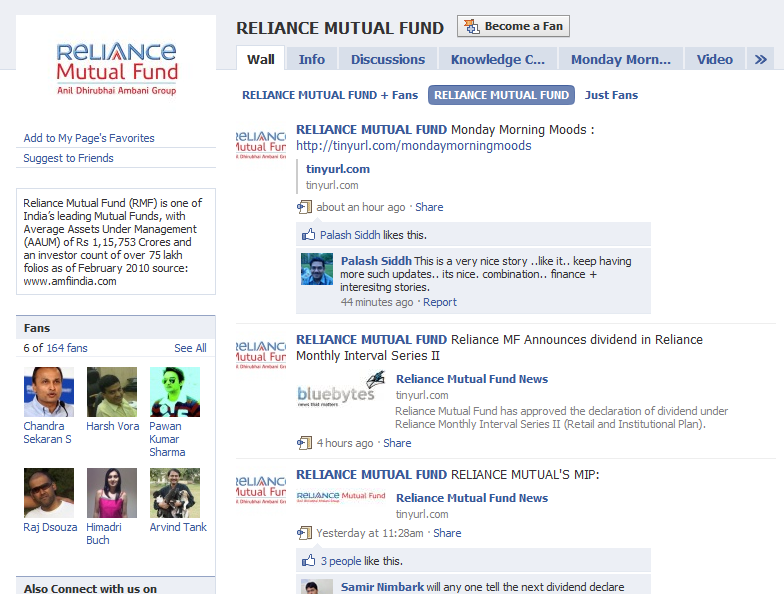
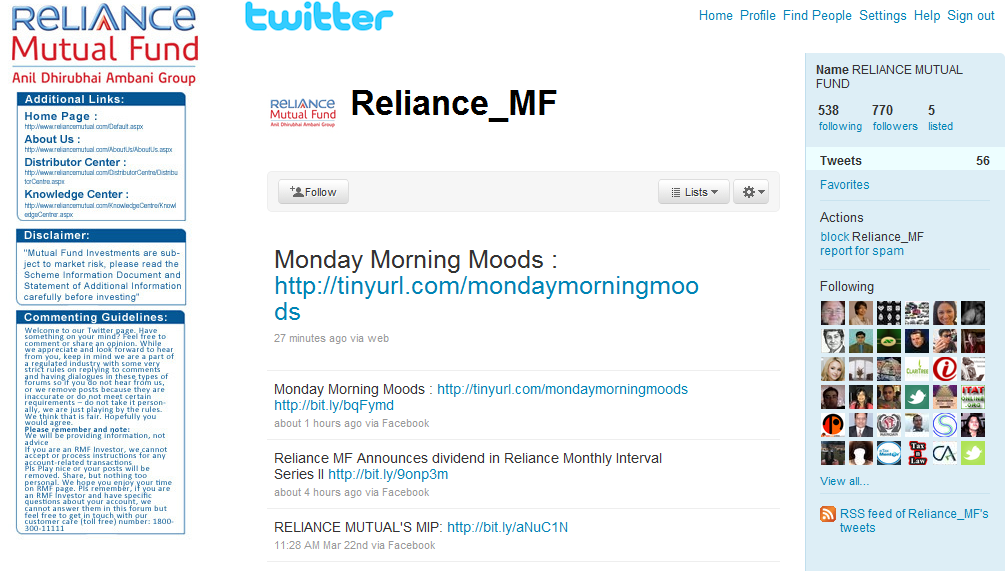
And here’s what you get when you click the icons

Facebook:

Twitter:

Orkut:

These screenshots pretty much tell the Social Media story for Reliance MF, which is so typical for most companies that are trying to be there but are no where near the optimum experience. It will take them some time and effort to understand there’s more to Social Media than reposting links and hopefully they’ll get hang of things before they run into a Nestle Like crisis

March 23, 2010   No Comments

Practical tips for handling a Facebook Fan Page Crisis

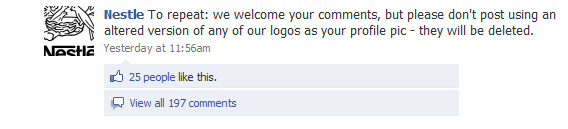
A couple days back the food giant Nestle(after being targeted by Greenpeace) stepped on the wrong side of Social Media by posting rude and insensitive status updates and comments on their Facebook page. As expected, updates like this

and comments like this

did not go down well with their existing fans and those who checked the page because of the brouhaha. Therefore, Nestle suddenly found itself in middle of another debacle courtesy inappropriate management of their Facebook page. The person handling their Facebook page obviously had no idea (nor does he/she have any now) of the blunder he/she committed.

Now that the mistakes have been made and realized, what next? I’ve read as much as ten posts by Indian and International bloggers/social media whatevers essentially either link blogging what others are saying or making the most obvious and superficial suggestions how the tone of the messages should not have been rude etc. Interestingly none of them offered a direction if not a solution of what can a brand do if it happens to run into a situation like this.
Possibly, it’s because none of those who wrote about the Nestle Crisis have ever managed a single Fan page by themselves.

Keeping that aside here’s a quick list of things that I would have done had I been in charge of the Fan page
( I have intentionally limited the scope of discussion to Facebook Fan Page and Off course I don’t expect everyone to agree with my method)

1) Admit you have made mistake(s):
One of the best ways to start your firefighting plan is by acknowledging your mistake and maybe promising that it won’t happen in future. A big brand admitting they did something wrong and apologizing gives everyone the signal that the brand is conscious of what it is doing and sets the expectation right. Also, most aggressive critics and fans turned critics an ego boost from this.

2) Remove offensive content:
Yes, remove the content that offended people. Irrespective of what others feel I am a strongly believer that you should remove offensive content to avoid it offending even more people. An offensive status message will keep getting more eyeballs with time and it’s best to take it out of the loop.

3) Change the Landing Tab:

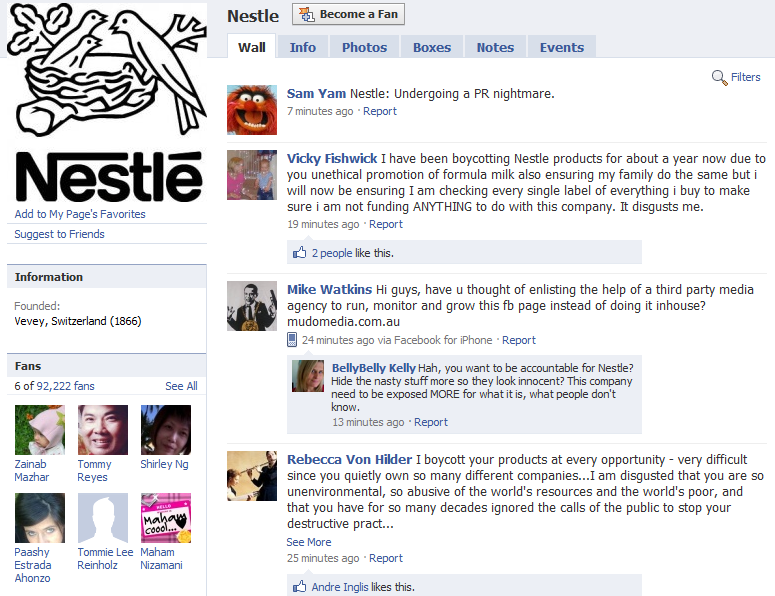
This is what one gets if they go to the Nestle Facebook page

The deal here is that it shows you the same things irrespective of the fact whether you are a fan or not. This landing page could temporarily be changed to some other tab, say info.

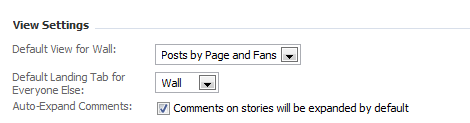
Facebook Default Landing Tab settings.

4)Turn of “Auto expand” comments:

Slightly below the default landing tab drop down is another option that let’s you configure if the comments

on a status will be expanded by default(with top few comments listed) or will they just show up as *x comments*, only on clicking which one can see the comments. The idea here is to reduce the visibility of negative content so as to reduce others doing the same thing.

These are just a few things that can possibly be done to control the situation from flaring further and in case things go really out of hand temporarily stop fans from posting comments to your page all-together.

All the points mentioned above are just for firefighting a Nestle like crisis on Facebook and are obviously not the perfect solution. Some people for example might have issues with removing the offensive content or making it less/easily visible but then a temporary fix needs to be done to avoid things from spilling over. Also, once the basic firefighting is taken care of the brand must get back to doing the right things and work its way out of the Crisis.

March 21, 2010   2 Comments

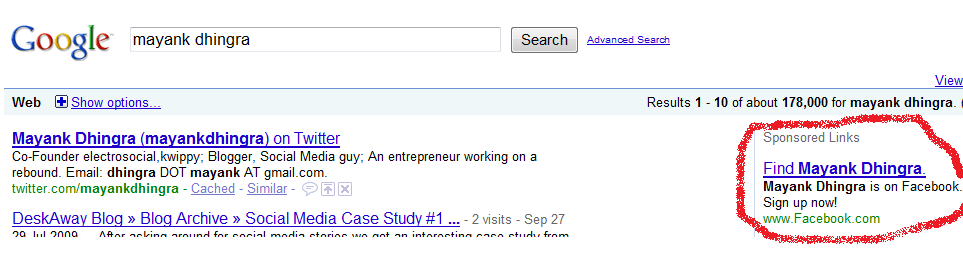
Looking for someome? someone is on Facebook?

Ego searches on Google aren’t uncommon and one of the most recent ego searches made me notice something unusual.

facebook adYes, that’s an ad by Facebook for the name “Mayank Dhingra”. Out of curiosity I made a random India name search and

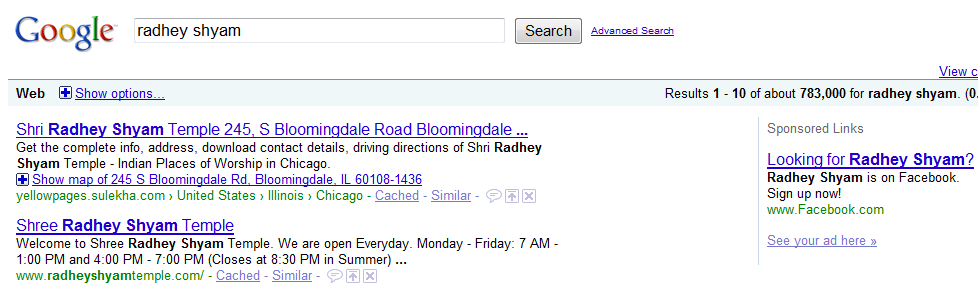
facebook ad

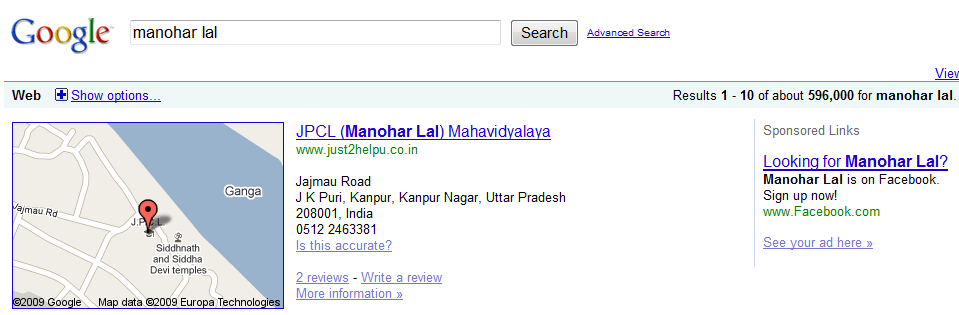
Sure enough Facebook is upto something, A couple more random searches on Indian names confirmed it

facebook ad

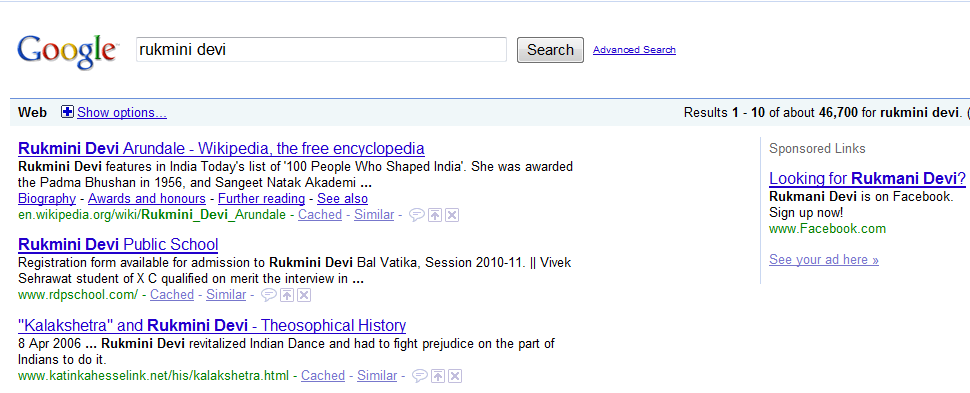
random facebook ads

Looks like Facebook has taken a lot of Indian names(random?) and bought Google ads for them. A SEM trick to get more traffic and signups?

December 15, 2009   2 Comments

Designing Notification Emails: What you can learn from Friendfeed and others

Email notifications for various actions(like new friend request, new follower) play an important role in getting a user back to the site and making them perform an action (accept/deny or follow back). Also, given the huge size of various social networks and thinking of these emails as a customer touch point it’s helpful to have a nicely designed notification email template. I’ve written a couple of posts on the same earlier too.

In this post I’ll try to compare the notification email by various popular platforms for the basic action of getting a new friend,follower, subscriber etc and see whose doing what and what could they do to make things better.

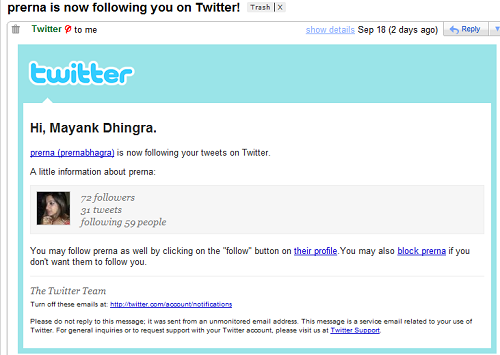
1) Twitter:
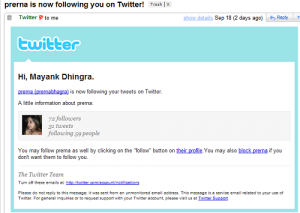

Format: HTML; Display Pic: Included; Call to Action: Visit profile; Direct Action: Block

This template is mostly good enough to decide if a user wants to follow back another user of not but by having a direct follow button would have helped.

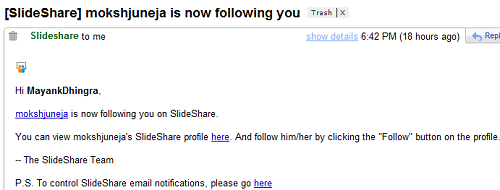
2) Slideshare
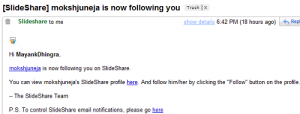

Format: HTML; Display Pic: Not Included; Call to Action: Visit profileDirect Action: None

This template is plain and simple but it doesn’t have a display pic for new follower and it doesn’t have a direct button for an action. Also, it has two links which point to the same page, which isn’t the best thing .

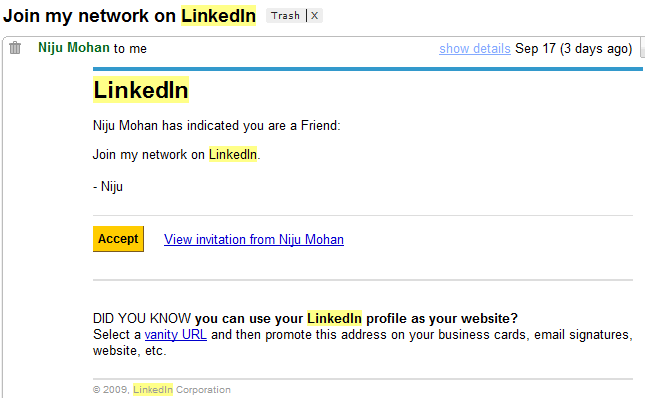
3) LinkedIn
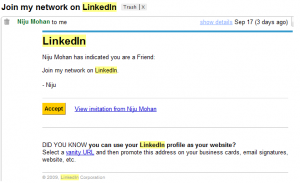
Format: HTML; Display Pic: Not Included; Call to Action: View InvitationDirect Action: Accept Invitation.

While Linkedin has a direct action button they don’t have any detail about the user in question. Here again a picture or some more description will be helpful.

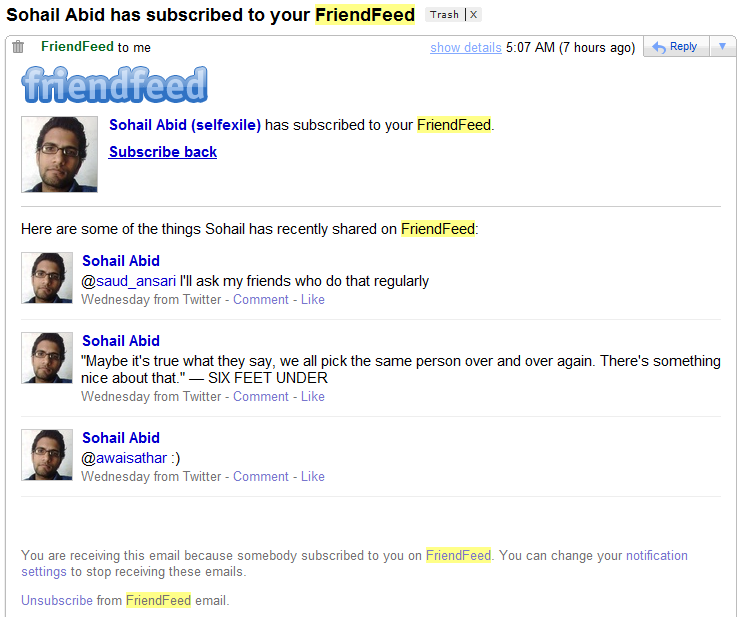
4) FriendFeed:
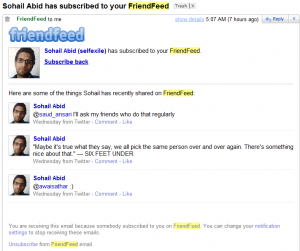
Format: HTML; Display Pic: Included; Call to Action: NoneDirect Action: Subscribe back

Friendfeed has by far the best designed email notification template in which they have the display pic, last few updates and just one link to get direct action(subscribe back) from the user

5) Facebook:
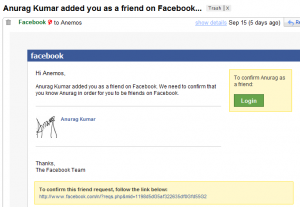

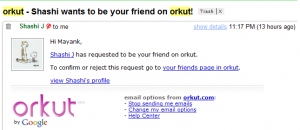
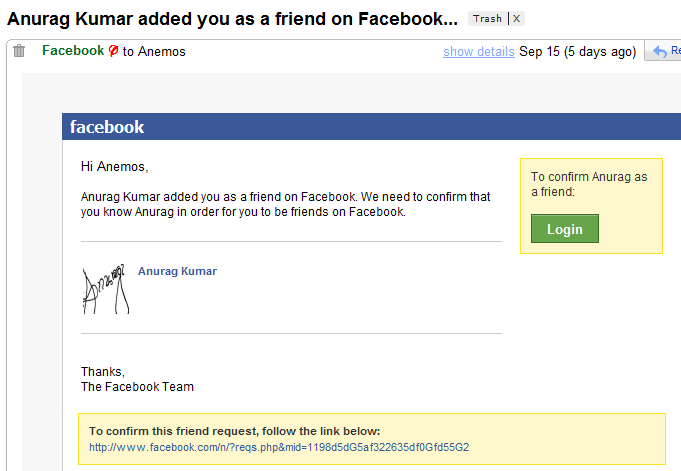
Format: HTML; Display Pic: Included; Call to Action: Visit request Direct Action: Accept Request.

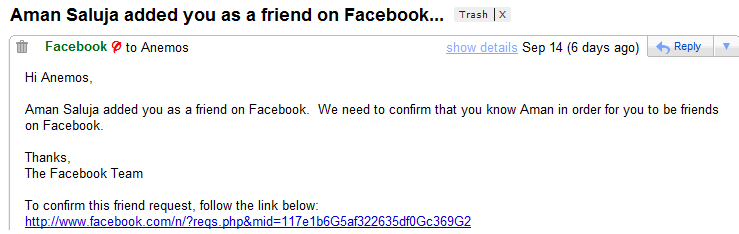
Facebook has changed it’s notification from the older one (active till 14th september 09). While they have definitely gone the Friendfeed way, the name  of direct action button is Login which doesn’t kinda look right.
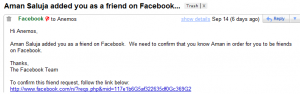
Format: Text; Display Pic: Not Included; Call to Action: View RequestDirect Action: None

6) Orkut:


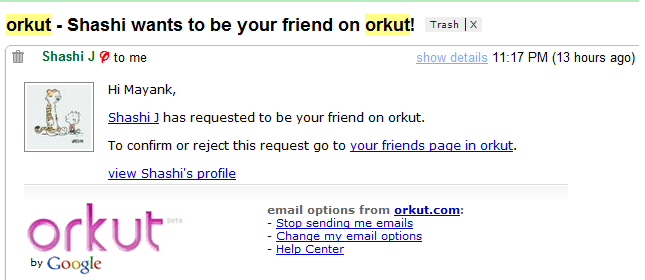
Format: HTML; Display Pic: Included; Call to Action: Visit profile and Visit friends pageDirect Action: None

Orkut too like slideshare has two links to the user’s profile and a third link which reads ‘visit friends page’ but it takes you to a separate ‘add friends’ page ala facebook.  Also there is no direct call to action here too.

While there could be reasons for not having a direct action button for Facebook and  Orkut(because they need to group friends into categories for example) some sites like Slideshare and Twitter can easily pick this.{Tip 1}

Having two links to the same profile page is definitely not wise and needs to be taken care off {Tip 2}. Other tips like having some profile info and a display picture can help {Tip 3} in a direct call to action(button etc) {Tip 4} if there is.

As you might have noticed eventually every notification email has moved to HTML format as it has more options like better looks and including a direct action call. {Tip 5}

What do you think about these email notifications?
September 20, 2009   10 Comments

Facebook’s Live-Stream Widget

Last night while adding facebook badge to my blog when I stumbled upon the facebook widget page I didn’t really play around much to checkout the other widgets like live-stream one. But it was now when Techcrunch reported it I thought of checking it out again. So here’s the deal

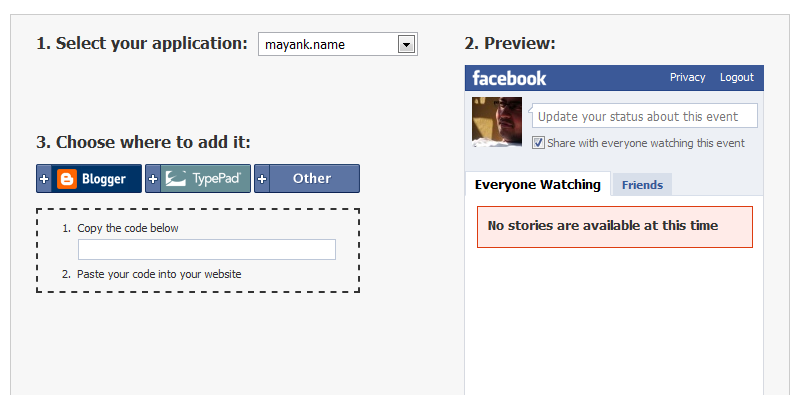
The live stream widget( apparently meant for website or business widgets as opposed to personal ones)  lets you do the following

1) Update your facebook status from the widget or ‘Page Admin Preview’ as they call it

2) Access and share(with anyone who can see the widget) facebook statuses of your friends and everyone(think CNN-FB integration during Obama’s ceremony)

3) Comment and Like facebook statuses  just as you could do them in facebook.

While all this is quite clear to me, I am not really sure what’s the deal with the option to ‘select an application’, which essentially means choosing a page. I choose a page and posted an update via the ‘Page Admin Preview’ but it didn’t reflect on the fan page which I had selected. If you want to figure out how it all works, try checking out this, it might throw some light

Let’s see what’s the deal like.

Also, seems like facebook is still working on the widgets as the widget doesn’t seem to work properly for most

September 5, 2009   1 Comment

Ready, Steady and Follow ?

I was in for a little(or is it?) surprise while surfing yesterday. I stumbled upon a blogpost that mentioned new changes with Scribd and on checking the site, here’s what I found.

Act 1: Scribd

social scribd

Looks familiar ? You bet it does.

The latest changes seem straight from Twitter’s design books. From Tweeting err Scriblling box to follower/following it all traces it’s root to Twitter but that’s not it. Another there’s also a conscpicous attach button(in white) down left. Clicking which leads to

attach scribd documents
So now scribd users can scribble updates and also attach scribd documents(there’s or someone else’s) to them.

Reminds of Pownce ? It does to me.

Here’s what a scribble looks like

getting social with scribd

A user profile page with scribbles looks like this

scribd profile page

These are some of the efforts taken by team Scribd to make their platform more social and as mentioned in the blog post, there’s more to come.

Act 2: Slideshare

While uploading a case study I compiled on Slideshare yesterday I happened to notice a change in their terminology too.

new design slideshare
Follow ? Wasn’t there a different name to this till some time back ? Yes, before being followers they were contacts.

These changes are part of the new profile design change. Interestingly unlike the scribd blog post on new changes, the post at Slideshare blog doesn’t mention the change in terminology and apparently the changes aren’t mentioned anywhere else either. I couldn’t make out if there’s anything more to the ‘following/follower’ change than terminology as the functionality remains same.

So now users can follow other users from Sribd and Slideshare respectively.

At Scribd, we believe that the written word is no longer static; the next major evolution of the “print” medium will be social and readers will contribute to authors’ never-finished works that evolve over time.

As stated in the opening lines of their blog post, Scribd probably has a few things up their sleeve about the whole making ‘Scribd Social’ campaign. While having ability to post updates/scribbles and attach files should see an increase in public interaction amongst users it’s the idea of having followers and followees(for lack of a better word) in both Slideshare and Scribd that intrigues me. Friends or Contacts are NOT same as Followers and these terms shouldn’t be used loosely, especially when they have been around for some time. Also, in Slideshare’s case I particularly don’t see ANY need for this change(same goes for Scribd BTW).

Did I hear someone say in Slideshare the term follower is apt because you get to see updates of your contacts( or whatever) on your home page ?
Right, since you see small updates about activities of your connections in a feed on your home page and get to see their latest slideshows on your page, ‘Follow’ is the best way to describe your relationship. Duh !!

Going by this reason since you can see latest photographs from your connections on Flickr, why not start the  follower/following game in Flickr too ? The point in case is simple, follower/following works for Twitter because there the MAIN activity is to subscribe/follow what other people are upto, which isn’t the case with Scribd or Slideshare(or is it ?) . You might want to know what your contacts uploaded but that’s a seperate thing and a small part of the whole thing.

Going by the fact that people on any social network want to stay updated about their connections should we just have followers and following on every social site ? Also, think from the point of view of an existing user who had spent some time on a site making contacts/friends for some time and come one day he gets to know that now he doesn’t have any contacts but he’s following the same people. I certainly wouldn’t like that abstract change. Will you like it?

Would you like if you wake up one day and see that you have no friends on Facebook but people you follow and people who follow you ?

July 30, 2009   6 Comments

Facebook adds choice to not see new friend’s posts on your home page

While there are news about bigger updates from Facebook I saw another new feature. While accepting friend requests now you can choose if you want to get their (new friend’s) posts on your home page. This is a nice li’l change that lets you be proactive in deciding what appears on your home page as opposed to what does not appear on your home page.

A small yet useful change, what say ?

facebook_newsfeed_update

Also, if you happen to be in this pic, I suggest you share a bit about yourself to help me with ‘Confirm’ or ‘Ignore’

June 25, 2009   3 Comments

How is Social Software changing us

The invention of a tool doesn’t create change; it has to have been around long enough that most society is using it. It’s when a technology becomes normal, then ubiquitous, and finally so pervasive as to be invisible, that the really profound changes happen.

Social Software has been around for quite a long time for us to ask the question “how has its use changed us” or rather “how is excessive use of social software changing us”. To crowdsource views , I asked this question on the social networks I use i.e LinkedIn,Kwippy, Twitter and Facebook. While a lot of people took the question in a different light and shared how is social media helping them etc,  here are some of the interesting replies(network wise)

LinkedIn:

“While I was a very private and secretive person before, I’ve found that opening up on social media via non-threatening means has given me the ability to be more open in my real world relationships”  - Shamoz Shah

” With increasing interaction over social media my faculty for thinking and rationalizing has increased. Because of my writings, discussions, posts I have a ready audience who interact. As a result of it I get motivated and write/discuss/post more and it’s a cycle. It has definitely improved my writing skills, thinking skills, rationalizing faculty (being open to various thought processes).

In negatives, I have become more reclusive because I am glued to my computer for more number of hours. Impacted on eye-sights (natural I suppose).

Thirdly, the anonymity provided by cyber-media and through certain Social Media sites, such as ‘fropper’ you tend to fantasies or possibility of personality distortion.” -Devasis Chattopadhyay

I communicate more. Like now. It is good that this communication is non-intrusive and you have more choices to connect personally or professionally.” – Bama Ramesh

“The thing I noticed I started doing more and more, is to double check if I am not offending anyone with my replies / posts. I’ve learned that there are some quite sensitive topics, where it is not appreciated if you express yourself in a frank way, even if there is no purpose in attacking a certain group” – Ives De Busser

Sushaantu Mathur repeated the same thing  – “Living an online life just makes you more accountable in public eyes”.

Shawn is right when he says “Social networks have lessened my patience a bit . Think about how fast information flies around the web and the speed at which we receive breaking news. When we’re plugged in, we’re able to get what we want almost instantaneously. I have to sit back at times and remind myself that many things in life don’t work that way”

“Bigger bags under my eyes!” – Mark Porter

“The evidence we do have from reliable studies is that social networking software is helping people become more social. The most active people on Facebook, for instance, are the most active socially in the “real world”. And as some of the answers on this page suggest, people who have social fears or difficulties are finding that online social networking is helping them overcome such issues.

Overall, it is clear to me that social networking software is a substantial help to people. It deepens existing relationships, makes people more social (not less) and helps individuals with social anxiety come to terms with their condition.

So, I’d encourage people to use it even more.” – Graham Jones

Kwippy

“My friends don’t tell me anything directly anymore. I constantly hear “Oh, you didn’t see my post about it on myspace?” and “Well, I invited you on facebook!” I can’t keep up, frankly.” - Tarasa

Facebook:

It definitely has. Soon there will be internet/social media rehabs! – Riputapan Singh

The virtual world has made me more real. I was in an island before, now i know of the ocean. – Harish Iyer

Twitter:

“Its ensured my ‘breaking news’ sources are not the newspapers or the websites anymore.  Also, I am more clued into ur life” – Asfaq

To each according to their own,  while for someone it’s about opening up more, for someone it’s about being more visible and ultimately more accountable. Here are a few inter related ways in which I think Excessive/Continued use of social software is changing us.

1) Increased thirst for knowledge:
The use of social software has not just helped us meet new people easily and regularly or stay in touch with old friends. It has made us more hungry for knowledge/information. Thanks to the exposure(over ?) of  information on most social sites(think no of hyperlinks/update in your twitter/friendfeed stream) and various social pressures of sorts, most of us have become addicted to know more and more.

2) Increased Voyeurism:
Facebook Feeds and Twitter Streams are best examples of the increasing levels of voyeurism as a side effect of our increased usage of Social Software. People who replied to my question on various social networks, directly or indirectly touched upon this facet. It’s a lot easier to keep an eye on what’s going not just in one’s personal life but in their overall/complete life. The underlying principle of social networks is to keep people in your network updated about what you are doing. So not only your actions but those of your friends that invole you(for ex: you being tagged by someone) will be broadcasted to your entire network. Such things further fuel people’s voyeuristic tendencies. Whose single or whose relationship status just went to “It’s complicated” was never more visible or sought after.

3) Increased Sharing:
We might not realize this but due to easy of sharing and the culture(s) of most social sites, we are  increasingly sharing more stuff with people in our online circles. Hyperlinks, songs, videos, pictures,news we now share pretty much everything that we get our hands on and like(dislike too in some cases). “Sharing anchors community”, while most of us don’t realize this consciously, we have a sense that sharing adds value(or gets you attention) and thus you’ll find more people over sharing than under.

4) Increased Transparency:
It is one of the interesting ways in which social software is transforming us. What started of as a small change with people starting to share more about themselves and other people, things they know has gradually raised our expectations to the level that we now demand more and more transparency/openness from our friends and others on the network as if it’s our right to know what they are upto. Not only this we now expect much more transparency from public organizations and governments.

5) Compulsive Broadcasting/Life Streaming: Everyone’s an exhibitionist
If you are active user of facebook, kwippy and twitter like me chances are you too might have those moments when you are out somewhere doing something and you think in terms of what should be a relevant status update for it. For ex: While watching a movie, I tend to think and come up with the most relevant update for this experience, which in a sense distracts me(as I divert my attention from the movie to say updating my Facebook Status that my friends can see) from the experience. That’s not it, this habbit of continously throwing up on the web what ever comes to your mind is a really addictive habit but not without any side effects.

6) More Social:
If man was a social animal before than he’s now become a social beast. There will be very few people who would feel/say that they’ve become less social after using social software because the whole set up is geared to make you socialize. You get social objects which act as ice breakers, you get automated updates on people’s activites and a lot more. It is really difficult for someone to not make new friends or to not get more involved with one’s existing friends.Friends of Friends are now a lot more discoverable and accessible thus adding more links to your network.

7) Bloated Egos:
“Social Media is all about your ego” casually remarks a friend and I won’t say he’s completely wrong. Being in the space for about four years now and you sorta know what works for Social Software and what doesn’t. It’s not just Twitter or Facebook ,every social site that you use or have used has some inbuilt features to let the system massage your ego(think featured users) or let other members of the system massage you(think testimonials by friends). Be it the follower count, number of retweets, number of comments and likes your posted items receive, it’s all a big boost to one’s ego. It’s human, whether you like it or not most people prefer sites/networks/people/lifestlye(online or offline) that massage their egos to those who don’t. I believe if there’s something called a threshold or default level for bloated ego then we’ve left it miles away as a result of excessive usage of social software.

8.) Rise of the Marketers:
You are a marketer deal with it. That’s indeed the case, with the tools we use and how we use them we all are much better positioned to spread the word about ourselves or our products. Though the scale at which we all do things may vary we all atleast are better equipped than what we were before social software.

These are some of the ways  in which social software has changed us. How do you think has social software changed you ?


June 10, 2009   5 Comments